Why standard glasses and soft lenses don't work
A spectacle lens creates a single focal correction for the average curvature of the cornea. When the cornea is irregular, different parts of it have different curvatures, so no single lens power can correct them all simultaneously. Soft contact lenses drape over the cornea and conform to its shape: they effectively follow the irregularity rather than masking it. The result is that soft lenses on an irregular cornea may provide slightly better vision than glasses but still fall far short of what is possible.
How rigid lenses solve the problem
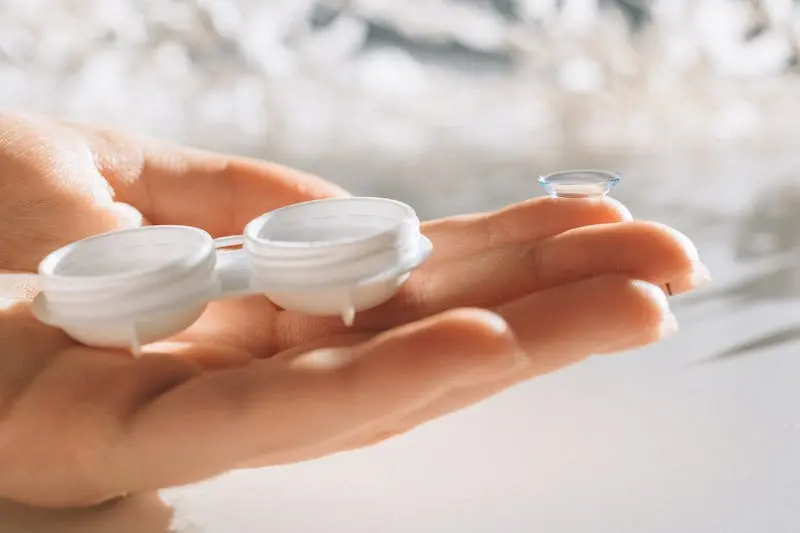
A rigid lens does not conform to the cornea's shape, it maintains its own smooth curve. The space between the back of the lens and the irregular corneal surface fills with tear fluid, creating a smooth liquid optical surface. The eye then sees through the back of the rigid lens, which has a regular curve, instead of through the irregular corneal surface. This is the fundamental principle behind specialty rigid lens correction of irregular corneas, and it works remarkably well even in severe cases.
Types of specialty lenses for irregular corneas
Several rigid lens designs are used depending on the type and severity of the irregularity:
RGP (Rigid Gas-Permeable) lenses
Smaller rigid lenses (9–11mm diameter) that rest on the cornea. Effective for moderate irregularity but can be uncomfortable if the fit is affected by a very steep or asymmetric cone.
Rose-K lenses
A family of RGP designs specifically engineered for keratoconus. The lens back surface has multiple curves that are matched to the typical topographic patterns of keratoconus. Rose-K lenses are the most widely used specialty lens for keratoconus worldwide.
Scleral lenses
Large lenses (16–22mm) that vault completely over the cornea and rest on the sclera. The most versatile option for severe or complex irregularity, including post-surgical corneas where the topography is highly unusual. The fluid reservoir provides both optical correction and corneal hydration.
Hybrid lenses
A rigid centre surrounded by a soft skirt. They provide the optical benefits of a rigid lens with some of the comfort of a soft lens. Used when RGP comfort is a limiting factor but the irregularity isn't severe enough to require a scleral lens.
What does the fitting process involve?
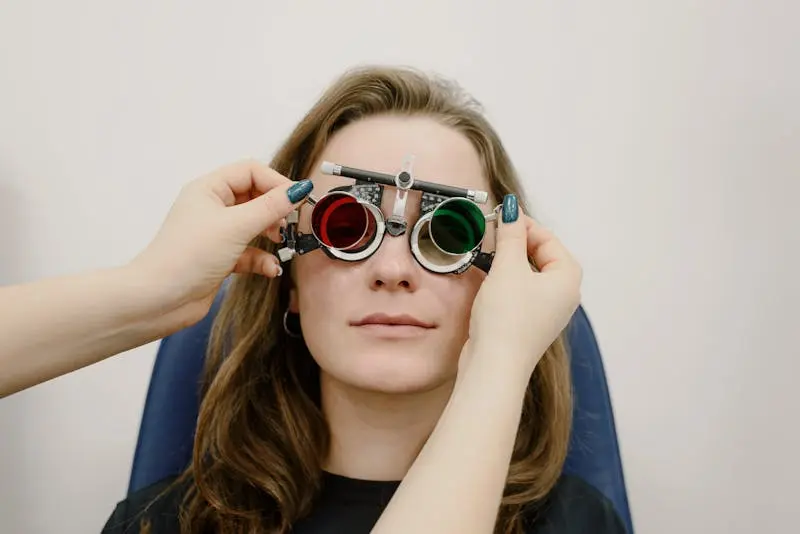
Fitting specialty lenses on an irregular cornea is a specialist procedure that requires corneal topography equipment, a trained fitter, and a range of trial lenses. The topography map guides the initial lens selection, the base curve, diameter, and peripheral design are chosen based on the corneal shape data. Trial lenses are inserted and assessed under the slit lamp for alignment, centration, and movement. The process typically requires 2–5 visits to achieve the optimal design for complex cases.
What vision improvement can you expect?
For keratoconus, many patients achieve 6/6 or close to it with well-fitted specialty lenses, even those who have been managing with significantly reduced vision. For post-surgical corneas, the improvement is highly variable depending on the surgery type and the resulting corneal shape. The honest answer is that we cannot predict the final visual outcome until we have tried the lens on your eye, but the improvement from your starting point is usually significant.
Specialty lens fitting for irregular corneas at Second Sight
Fitting specialty lenses on irregular corneas is the core of what we do at Second Sight. Every case starts with detailed corneal topography. We have experience fitting complex keratoconus, post-LASIK, post-RK, post-transplant, and scarred corneas. Our fitting approach is methodical, we don't rush to a final lens design until the topography response confirms we're on the right track.
Book a Free Eye Test →